










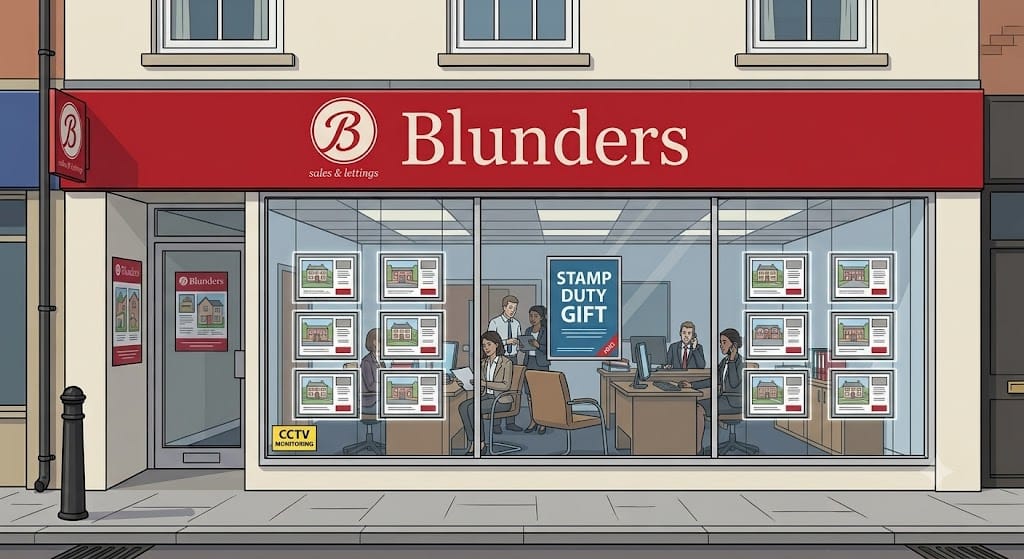
When you're browsing rental listings, it's easy to assume every property works the same way behind the scenes: you view it, you sign, you move in. In reality, there are two quite different setups in the rental market, and which one you're dealing with can affect everything from how fast repairs get fixed to how your deposit is handled.
Here's a genuinely balanced look at the difference, and the questions worth asking before you commit.
What's the actual difference between a letting agent and an owner-landlord?
A letting agent typically manages a property on behalf of someone else — an individual landlord, a small investor, or sometimes an overseas owner. The agent handles viewings, contracts, and day-to-day queries, but major decisions (repairs above a certain cost, contract terms, whether to renew you) usually still need sign-off from the actual property owner.
An owner-operator — a company or landlord that owns and manages its own portfolio directly — cuts out that middle step. The people you're dealing with at the viewing stage are the same people who own the building, set the maintenance budget, and make the final call on your tenancy. In Sheffield, West One Lettings is a good example of this model: it owns and manages its own portfolio of around 1,500 beds across apartments, studios, and houses, rather than letting other landlords' properties on a commission basis.
Neither model is automatically "better" — but they do come with genuinely different trade-offs.
Does it matter who owns the property when something breaks?
It can, quite a lot. With a traditional agent-managed property, a repair request often has to go: tenant → agent → landlord → contractor → back to agent → back to tenant. Each step adds time, and if the landlord is slow to respond, approve a cost, or simply unreachable, you can be left waiting.
With an owner-managed property, that chain is shorter by design — the same organisation that takes your call is also the one paying for the repair and instructing the contractor, so there's no third party to wait on for approval. Typically, this doesn't guarantee a faster fix in every case (a contractor's availability is still a contractor's availability); however, West One Lettings has an in-house team of skilled tradespeople to repair without delay.
Is my deposit or rent more secure with one model over the other?
Both models are legally required to protect your deposit in a government-approved scheme, and both are bound by the same Renters' Rights Act 2025 rules — one month's rent cap upfront, no rent-bidding wars, two months' notice for any rent increase, and so on. So on paper, your statutory protections are identical either way.
Where it can differ in practice is accountability. If an agent is managing on behalf of a landlord who has gone quiet, fallen into financial difficulty, or is simply hard to reach, tenants can sometimes find themselves stuck between two parties pointing at each other. An owner-operator answers for the property directly — there's no second party to chase.
Are owner-managed properties more expensive?
Not inherently. Rent in Sheffield is driven mainly by location, property type, and condition, not by who owns the freehold. If anything, agencies that own their own stock sometimes have more flexibility on things like deposit terms or move-in dates, simply because they're not waiting on a third party's approval for every decision.
What should I actually ask before signing, regardless of which model it is?
Whichever you're considering, it's worth asking directly:
- Who do I contact for repairs, and what's the typical response time?
- Is the deposit protected, and which scheme is it held in?
- If the landlord sold the property, what would happen to my tenancy? (This is one area where owner-operators with long-term portfolios can offer more continuity, simply because the property isn't a single buy-to-let that could be sold on a whim.)
- Who actually owns the property — is the person/company I'm dealing with the final decision-maker?
Getting clear, direct answers to these — rather than "I'll have to check with the landlord" — tells you a lot about which model you're actually renting under, even if the listing doesn't say so explicitly.
Quick summary
| Letting agent (third-party landlord) | Owner-operator (e.g. West One Lettings) | |
|---|---|---|
| Who makes decisions | The agent relays to the landlord for approval | Direct — no third party |
| Repair chain | Tenant → agent → landlord → contractor | Tenant → owner → contractor |
| Deposit protection | Legally required either way | Legally required either way |
| Continuity if sold | Property can be sold independently of management | Tied to a long-term portfolio strategy |
| Statutory rights (Renters' Rights Act) | Identical | Identical |
This article offers general guidance to help tenants understand how different rental management structures work in practice. It isn't intended to suggest one specific company over another — always do your own research and ask direct questions before signing any tenancy agreement.